Speaker Insight | Digital Oil & Gas Summit 2026
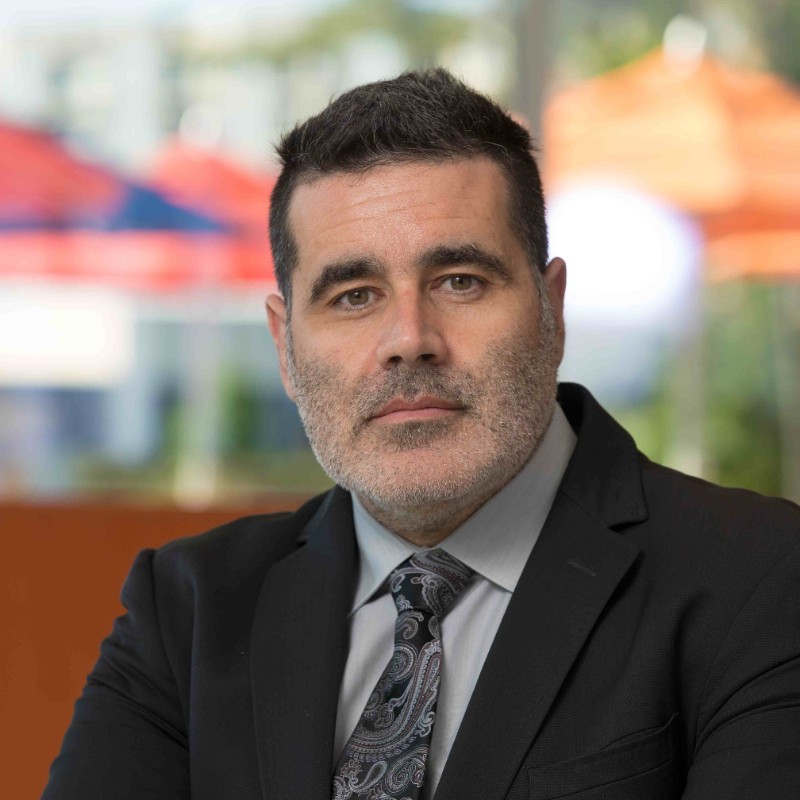
Ahead of the Digital Oil & Gas Summit 2026, we spoke with José María González Muñoz, Geology & Geophysics Operations Manager within Repsol’s Upstream Technical Division. With more than 16 years of leadership experience across exploration, cost efficiency, technical services and HSE, his career has been shaped by the early convergence of operations and digital enablement.
Today, he brings a practical, operations-led perspective on automation in upstream oil & gas, particularly within complex subsurface and exploration environments.
At the Summit, he will share frontline insight into scaling automation within G&G workflows, embedding AI into operational decision-making, and navigating the cultural shift required to turn digital ambition into measurable operational value.
Topics Covered
- Practical implementation of digital technologies in upstream environments
- Automation in upstream oil & gas
- AI in subsurface analysis and exploration workflows
- Data-driven decision making in oil & gas operations
- Scaling automation across G&G processes
- Cultural change and digital adoption in energy organisations
Jose, please tell us about yourself and your experience in the industry
I have a long education path (Bcs, Mcs, Postgraduate, MBA) which helps me to keep my technical curiosity alive and kicking. At the same time, I have been manager (Exploration, Cost Efficiency, Technical Services, HSE) for more than 16 years. This symbiosis was paramount to embrace, since late 90s, operations and digital enablement; focusing my interest on continuous improvement: operational excellence, decision-making, strategy versus tactics, etc…
How is your organization responding to digital transformation in the industry?
REPSOL has, and continues to have, a strong commitment to digital transformation with several key pillars: in-house knowledge + experience, collaboration, intensive use of data and Artificial Intelligence. These are paramount, among others, to develop, secure, and implement products to solve business, commercial (customer-focused solutions) and environmental challenges.
Other vertical digital levers are being deployed for an efficient & reliable digital transformation: smart assets, support function, boost sustainability and people+culture.
“REPSOL continues to have a strong commitment to digital transformation built on in-house knowledge, collaboration, intensive use of data and Artificial Intelligence.”
What outcomes do you hope to achieve in your participation at the Digital Oil & Gas Summit this year?
My goals are to exchange practical digital insights (not forgetting ideas and some visions) with industry peers and identify emerging trends that could benefit our operational model (both short and mid terms). I also hope to strengthen relationships with technology partners and gather ideas that can help us enhance (360º) our digital roadmap (not just transformation).
What excites you about the topics to be explored at the summit?
I’m excited by focusing on realworld implementation—beyond the buzzwords—to understand what truly delivers value, on practical applications for efficiency + rentability. Not forgetting discussions around AI adoption (how to solve challenges), integrated remote operations and the changing talent landscape will be particularly relevant for these complex times.
“Despite the rapid evolution of technology, the biggest limitation is often cultural rather than technical.”
What do you see as the biggest challenges affecting the industry over the next 12 months?
Key challenges include, as always (here before and will stay longer) navigating price volatility, ensuring feasible decarbonization aligned with profitability, while maintaining operational performance, and managing the pace of digital transformation across diverse asset portfolios. Workforce capability and change management will remain critical success factors.
What surprises you most about digital transformation in the industry?
Despite the rapid evolution of technology, the biggest limitation is often cultural rather than technical (understand real digital revolutions as soon as possible). Tools are available, the data exists, and the value is clear—but adoption requires mindset change, new competencies and more agile ways of working.
How do you see digitalization and automation improving the sector?
Digitalization and automation have the potential to drastically reduce inefficiencies, enhance safety, boost profitability and improve subsurface sensitivities (a 3D model is always a simplification of reality, a higher number of cases helps sensibilities). From automated data conditioning to predictive operational insights, the potential lies in freeing specialists from repetitive tasks so they can focus on highvalue interpretation and decisionmaking.
Can you think of examples within your own projects where automation or digitalization has improved the sector?
We’ve implemented automated workflows for data analysis. These initiatives have shortened cycle times, increased consistency and enabled faster decisionmaking (or provided more time for analysis rather than purely data revision). Automation has also improved traceability and reduced manual error across several core G&G processes.
“Automation has shortened cycle times, increased consistency and enabled faster decision-making.”
What are the biggest challenges in planning, designing and implementing digital and automation strategies?
The main challenges are data quality, digital change resistance, complexity in systems integration, and ensuring that solutions scale beyond isolated use cases. Governance and clear ownership are also essential to prevent fragmentation and duplication; and to focus on the added value…
What did you learn from project experiences that might help industry colleagues going forward?
Start small, prove value quickly, and scale systematically. Strong stakeholder engagement is essential, as is the need to align digitalization efforts with real operational pain points (sorry, but they are linked; we like it or not).
“Automation has shortened cycle times, increased consistency and enabled faster decision-making.”
What advice would you give someone just entering the industry, and what are your biggest career learnings?
Stay curious, build crossdisciplinary knowledge, and embrace digital skills early (as we have done in the 80s with first computers). The energy sector rewards, nevertheless, adaptability and longterm thinking. My biggest learning is that collaboration and continuous learning are far more valuable than any single ad hoc technical skill (or so I think).
Why should industry colleagues come to the summit in 2026?
This summit, as per my intuition, offers a unique platform to learn from real ongoing digital projects, understand where the industry is heading, and form alliances that accelerate innovation. It’s one space where technology leaders, operators and partners could come together to try to shape digital reality and the future of the sector.
What is your top tip when attending summits and conferences?
Come with specific objectives in advance, but stay open to unexpected opportunities (dynamic approach, as life teaches us). Prioritize meaningful conversations over packing your own schedule (or just your book)—and always follow up promptly afterwards. Continuity is a must…
José, thank you for sharing your insights and experiences with us. Your perspective on automation, data and operational decision-making offers valuable context for the industry as digital technologies continue to evolve across upstream operations. We look forward to welcoming you to the Digital Oil & Gas Summit 2026 and continuing the conversation alongside fellow industry leaders.